


Benjamin Harrison: VA Declaration of Independence
- katellashisadventure
- 4 hours ago
- 7 min read
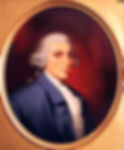
Benjamin Harrison was born on April 5, 1726, at Berkley Plantation, in Virginia, to Benjamin Harrison IV and Ann (Carter) Harrison. He was one of ten children. His paternal Great-Great Grandfather, Benjamin Harrison I, came to America in 1633, from the Isle of Write, England. He and his descendants would hold a variety of offices under the royal and state government. His maternal Great-Great Grandfather came to Virginia in 1649 from Casstown, England. His mother, Ann, was the daughter of Robert “King” Carter, who counted among his grandsons Carter Braxton and Thomas Nelson Jr. Robert Carter owned, at one time, 300,000 acres of land and over 1,000 slaves. He was a very influential member of society. In addition, Harrison was related to most of the leading pioneer families of Virginia either by marriage or descent. Carter Braxton, Thomas Nelson Jr., and the Lees of Stafford Hall, including Confederate General Robert E. Lee, are his cousins. His brother-in-law would be the future First President of the Continental Congress, Peyton Randolph, and his brother, Carter, would marry Susanna Randolph, who was the maternal aunt of Thomas Jefferson.
Harrison attended William and Mary College but left before graduating in 1745, after his father and two sisters were killed in a lightning storm at Berkley Plantation on July 12, 1745. He has to take over management of the family estate, which consists of 1,000 acres. It turned out that he was an excellent businessman, and the family would end up owning eight plantations and a shipping business. He specialized in tobacco and breeding horses. Berkley Plantation would be the scene of many historical events, including General McClellan’s use of it as his headquarters while he tried to capture Richmond during the Civil War. The music for Taps would also be written there. The Harrison family would lose the plantation after the Civil War, and it would pass through a succession of owners who allowed it to fall into disrepair. It was finally sold to the Jamison family, around 1907, who worked to restore the lands and buildings. It is possibly the oldest three-story brick home in Virginia, and it is actually dated above a side door with the initials of Benjamin Harrison IV and his wife, Ann. It is currently in private hands, but it opened for public tours. The current owners have taken great care to ensure it is as authentic as possible, even keeping the driveway covered in crushed stone and graded as it would have been for a horse and carriage.
In 1748, he married his second cousin, Elizabeth Bassett. She was the daughter of Colonel William Bassett and the niece of Mrs. Martha Washington. They would have eight children, but only seven would survive to adulthood. Their first daughter, Elizabeth, was born in 1751 and died in Charles City, Virginia, in 1815. She marries, possibly, an Edmonson, then a William Rickman, and has no children. Their second daughter, Ann, was born on May 21, 1753, and died on April 20, 1831. She married David O’Sheals of Coupland and has at least two children. Lucy was born in 1755 and passed away on May 16, 1784, in Staunton, Virginia. She marries Peyton Randolph, then Captain Anthony Singleton, and has four children. Their first son was born in 1755 and was named Benjamin. He would die in 1795, in Charles City, Virginia. He was married twice, first to Anna Mercer and then to Susan Randolph. Their next son, Carter Bassett, was born around 1756 or 1757 and died on April 18, 1808, in Prince George, Virginia. He marries Mary Howell. Nathaniel was born on March 20, 1759, but the date of his death is unknown. Another daughter, Sarah, was born in November of 1770. She married Dr. John Minge and then died on February 27, 1812. William Henry was born on February 9, 1773, and passed away on April 4, 1841, in Washington DC. He marries Anna Symmes, and they have ten children. He would become the 9th President of the United States and the first to die in office from pneumonia, which he contracted after giving the longest inaugural speech in history. Legend has it that an old Indian Chief cursed the presidency so that every twenty years, a President would die in office. The death of a sitting president would occur every 20 years after William Henry Harrison’s death until 1980, when President Reagan broke the alleged curse. Harrison’s great-great-great-grandson was a urologist who helped develop the process for kidney transplants.
Harrison was elected to the House of Burgesses in 1749 and sometimes served as Speaker of the House. He would continue to be a representative until the Royal Governor, Lord Dunmore, dissolved the House of Burgesses in 1774. He was a member of the committee that drafted the protest against the Stamp Act, and he assisted in preparing the correspondence sent to the House of Commons and Lords, which opposed the Stamp Act. In 1765, he opposed Patrick Henry’s resolutions, which urged civil disobedience. He does not believe the resolutions would achieve the results they were seeking. He also opposed the Townshend Acts and, in 1772, urged that the importation of slaves be curbed and taxed. Harrison was then offered a seat on the Virginia Executive Council but declined, as he was more closely aligned with the people than with the royal government.
As a member of the General Assembly, he served on the Committee of Property and Grievances as well as the Committee of Trade in 1752. Then, in 1761, he was a Justice for Charles County. Once again, he was offered a seat on the Executive Council by Royal Governor Francis Fauquier because he came from a prominent family. Once again, he declines this appointment and pledges his support to the patriots’ resistance movement.
In August of 1774, he was elected a delegate to the First Continental Congress and arrived at Carpenter Hall on September 7, 1774, to present his credentials. He shared a residence with George Washington during the First Continental Congress, and during the Second Continental Congress, General Washington would lean heavily on him for military legislation. He also chairs the debates on the Articles of Association and signs them on October 20, 1774, before the Congress adjourns.
Upon his return to Virginia, he would represent Charles County in the various Virginia Conventions from 1775 to 1776. Upon the formation of the Virginia state government, he was elected to the House and was returned each year until 1781. He was re-elected a delegate to the Second Continental Congress. Legend has it that when John Hancock was reluctant to take the President’s chair, Harrison, who was 6’4” tall, went over and picked him up and set him in the President’s chair. He allegedly said, “We shall show Mother Britain how little we care for her by making a Massachusetts man our next president. Whom she has excluded from pardon by public proclamation.”[1]
In Congress, he tended to make short, plain speeches that got to the point. He rarely participated in debates and stayed busy with committee work. His jokes, in Congress, often revolved around his weight. He once joked that he had resolved to attend the Second Continental Congress, even if he had to walk to Philadelphia. Unfortunately, John Adams did not find him funny and thought he was indolent and fat, but was impressed when he talked of walking to Philadelphia from Virginia. He served on three major and important committees: the Board of War, which he chaired, the Financial Committee, and the Marine Committee. He was the first person chosen for the Committee of Secret, which would be the forerunner of the Department of State. His colleague on the financial committee was Robert Morris, who was also a long-time business partner.
He was Chairman of the Committee of the Whole from March 1776 to August 1777. John Adams, who despised Harrison, was not in favor of Harrison serving as Chair of the Committee of the Whole, believing he was too moderate to lead the debate. Richard Henry Lee’s Resolution was presented to the Committee on July 1, and Harrison voted for independence on July 2. He would sign the engrossed document on August 2, with another legend emerging from this incident. It is said that he told Gerry of Massachusetts, “It will be over with me in a minute but you will be kicking in the air half an hour after I am gone.” Unfortunately, Gerry is said to have not been there on August 2; therefore, Harrison could have said this to one of the other members of Congress, who happened to be smaller than him. Harrison stayed in Congress until 1777.
Upon leaving Congress in 1777, Harrison returned to Virginia and was elected to the Virginia House of Delegates. He was Speaker from May 1778 to 1781. While Speaker, in 1780, Benedict Arnold was camped near Berkley Plantation, and may have occupied it for some time, but it was not destroyed. Some things were burned, mostly ancestral portraits, and the British used his cows for targets during rifle practice. Harrison fled into the Blue Mountains with Patrick Henry and John Tyler during this time.
When his cousin and fellow Signer, Thomas Nelson, Jr., resigned the Governorship in 1781, Harrison was elected, and he would serve 3 one-year terms. Patrick Henry succeeded him. After leaving the governor’s office, he was re-elected to the House of Burgesses and would remain a member until his death. During his second tenure in the House of Burgesses, he was a member of the Virginia Ratifying Convention. He was Chairman of the Committee on Privileges and Elections but did not actively participate in any debates. He opposed the Constitution and believed that a Bill of Rights should precede, not follow, the document. He was overruled on this issue, but when the Constitution was ratified, he fully supported it.
In 1790, he was once again a candidate for governor but declined to run against incumbent Governor Randolph, as he was a close friend and confidant. As it turns out, this was a wise decision, because Harrison died on April 24, 1791, of gout, at his Berkley Plantation home in Charles City, Virginia. He was buried in the family cemetery at Berkley, and his wife was buried next to him when she passed in 1792.[2]
Tidbits He had moderate to conservative political beliefs which were slightly to the left of his cousin Carter Braxton. He was the fifth person in his family to be named Benjamin. Benjamin Rush notes: “He had strong state prejudices and was very hostile to the leading characters from New England state.” In private life, he preferred pleasure and convivial company to the business of all kinds… “He was upon whole a useful member of Congress, sincerely devoted to the welfare of his country.” His only known display of anger was when Samuel Adams engineered the cancellation of a ball in Martha Washington’s honor. |
[1] Kiernan, Denise, and Joseph D’Agnese. Signing Their Lives Away: The Fame and Misfortune of The Men Who Signed The Declaration of Independence (Philadelphia: Quirk Books, 2009) 172
[2] The Benjamin Rush quote is taken from Kiernan, Denise, and Joseph D’Agnese. Signing Their Lives Away: The Fame and Misfortune of The Men Who Signed The Declaration of Independence (Philadelphia: Quirk Books, 2009) 171
