


Francis Lightfoot Lee: VA Signer of the Declaration of Independence
- katellashisadventure
- 16 hours ago
- 7 min read

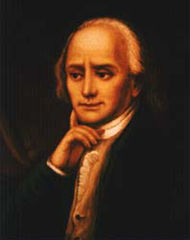
Francis Lightfoot Lee was born on October 14, 1734, at Stratford Hall in Westmoreland County, Virginia, to Thomas and Hannah (Ludwell) Lee. He was the eighth of eleven children and was the fourth son. His family called him Frank, and he had been named after his father’s best man. His family ancestry can be traced to England, where his great-grandfather, Richard Lee, was the secretary of Virginia Royal Governor Sir Francis Wyatt and came to America in 1639. Lee was a cousin and an uncle through marriage to Henry “Light Horse” Lee, who was the commander of a Revolutionary cavalry unit known as Lee’s Legion during the Revolution. Henry Lee was the father of Robert E. Lee, who would go on to be the Commanding General of the Confederate Army during the Civil War. It is said that President Lincoln asked Robert E. Lee to command the Union forces, and that General Lee responded: “As Virginia goes, so do I.”
Lee and his siblings were educated by private tutors, specifically a Craig, who was strict and stern. In 1759, at the age of sixteen, his parents passed away, and he was left a plantation in Northern Virginia, called Coton. He also received thirty slaves. His older brother, known as Colonel Phil, took a clause in his father’s will very seriously and, by 1754, still had not distributed the estate as he should have. Lee and his other siblings would bring suit against Colonel Phil, and it would continue until 1764, when it was dismissed in 1768. Colonel Phil had settled most of the estate, but some legacies went unfulfilled because debts still needed to be paid. This caused a strain amongst the brothers and sisters that was not resolved when Colonel Phil passed away in 1775.
Once he has his estate, he moves to Coton, in Loudoun County, and becomes a lieutenant. His brothers nicknamed him Loudon, after the county where his lands were located. Lee would remain single for nearly eleven years, in what was then the frontier. He was glad to be far away because it put him out of his brother, Colonel Phil’s, control. In 1758, he was elected to the House of Burgesses as a member from Loudon County and served until 1768. He will sign the Westmoreland Resolutions, against the Stamp Act, which his brother Richard Henry Lee had written. The Stamp Act was what led Lee to really get involved in politics. It had upset him, and once it passed, he would show up at any protest against the Act. It was during this time that he met Thomas Jefferson and Patrick Henry, with whom he became good friends.
In 1769, Francis Lee married his second cousin, Rebecca Tayloe. They live with her father at Mt. Airy Plantation, at first, and then move to Menokin, a plantation on the Rappahannock River, which her father had gifted to them for their wedding. Tayloe had made the gift because he did not want his daughter living so far away in Loudoun County. The word Menokin is Indian and means surrounding hills and creeks.[1] The home was hastily built and not built in accordance with the normal building practices of the time, as backfill was placed into the walls without the proper filler to hold it together. It is alleged that Lee and his father-in-law were not close, and this was the real reason for the hasty build, as Lee no longer wanted to live under Tayloe’s roof.[2] The home is currently a ruin, but the foundation that owns it is restoring it not only to showcase eighteenth-century building techniques but also to refurbish several rooms that were not damaged when a tree fell on the house in the 1960s. At least 80% of the house structure survived, as well as all of the woodwork, which had been removed from the house several years prior to the tree falling on it. Rebecca and Lee would have no children, and she died of pleurisy a few days before he did in 1797.
From 1769 until 1776, Lee was a member of the House of Burgesses from Richmond County. He was equal to his brother Richard Henry Lee in political ability but not in speaking ability. However, he was considered a more ardent revolutionist than Richard Henry, who often overshadowed him. Lee took part in every stand against the British and was a member of the committee that formed the Virginia Committee of Correspondence. In 1774, he was a member of the first Virginia convention and then, in the spring of 1775, was chosen a delegate to the First Continental Congress.
Lee took his seat in Carpenter Hall in September of 1775 and was continuously re-elected until 1779. While in Philadelphia, he and his brother, Richard Henry Lee, stay at their sister Alice’s home. Alice was married to a physician named William Shippen. Francis Lee was an incredibly quiet and shy man who said little. After some time, his wife, Rebecca, arrived in Philadelphia. Her arrival will help him greatly to overcome some of his shyness and begin to participate in the process.
He would serve on many committees and chair a special committee that oversees the army’s food supply. Pennsylvania was refusing to supply the army, and Lee wrote a letter to the Governor, basically telling him that Congress would take the farmers’ food unless the Pennsylvania government started supporting the army. Although he had no authority to make such a threat, the letter worked, and Pennsylvania began supplying the troops. Other committees that he participated in include the domestic and foreign issues committees, as well as being the Chairman of the Whole Committee on several occasions. As well, he participated in the framing of the Articles of Confederation and would sign them on November 15, 1777
On July 1, Lee wrote to Richard Henry, who had gone back to Virginia, expressing some frustration with Congress about debating government and independence instead of working to come together and oppose the enemy. Then, on July 2, he votes in favor of independence, and on August 2, he signs the engrossed document with his brother Richard Henry. They are the only brothers who sign the document.
In mid-1777, Lee resigns his seat in protest over his brother’s political problems in Virginia. His resignation was rescinded in August of 1777, once his brother had won his case before the Virginia House of Delegates. Then two of his brothers, William Lee and Arthur, would cause international troubles and overshadow the work he and Richard Henry had done in Congress. The Silas Deane Affair started when Deane spread rumors that William Lee and Arthur were undermining the Revolutionary efforts in England. He also charged that the French disliked Arthur, and it was affecting the relationship between the French and Americans. He did this because the Lees were close to uncovering some of his traitorous activities. The drama lasted for some time, and William Lee and Arthur were dropped from their post. Silas Deane was not reappointed, and he would pass away in 1789 of an alleged poisoning.[3]
Lee retires from Congress in July of 1779 and returns to Menokin to live with his wife and nieces, Portia and Cornelia Lee. From 1779 until 1785, he served in the Virginia Senate. Unlike his brother, Richard Henry, Lee was a staunch supporter of the Constitution, and this was one of the rare times they would disagree politically. By 1782, Lee had retired from politics and spent the remainder of his life at Menokin pursuing agricultural interests.
Francis Lightfoot Lee died on January 11, 1797, at Menokin, of pleurisy, a few days after his wife. Both were buried in a local graveyard, but 30 years after their deaths, they were moved to the Tayloe family Cemetery, which is located one-half mile behind Airy, the Tayloe homestead near Warsaw, Virginia. His sole heir was his nephew, Ludwell, who was Richard Henry’s son. He inherited the bulk of the estate, but other small bequests were made, such as a snuffbox, which was given to Richard Henry’s other son, also named Francis Lightfoot. Menokin passed into Rebecca’s younger brother’s hands because it had been built on Tayloe property. He left 50 guineas to his sister, Alice, and her husband for their kindness in housing him during his years in Philadelphia. In addition, he authored a lovely poem for his niece Nancy Shippen:
“Thy temper’s as soft as the dove’s
When she warbles aloft in the air
And they converses enchantingly sweet
When engaged in discourse with the fair
But when learning engrosses thy thought
Then thy genius shines brighter and best
And shoes that though surely wilt be
The adornment of all in the West” [4]
Tidbits Mark Twain said, “This man’s life-work was so inconspicuous that his name would be wholly forgotten, but for one thing – he signed the Declaration of Independence. Yet his life was a most useful and worthy one. It was a good and profitable voyage, though it left no phosphorescent splendors in its wake… In short, Francis Lightfoot Lee was a gentleman – a word which meant a great deal in his day, though it means nothing whatever in ours.” Benjamin Rush: “He was brother to Richard Henry Lee, but possessed I thought a more acute and correct mind.” The family had a reputation for being aggressive and prideful, but Francis Lightfoot was the opposite of that. He was a very calm and philosophical man. |
[1] Nagel, Paul C. The Lees of Virginia: Seven Generations of an American Family. (Oxford: Oxford University Press, 2007) 70
[2] Tour guide at Menokin
[3] Nagel, Paul C. The Lees of Virginia: Seven Generations of an American Family. (Oxford: Oxford University Press, 2007) 109-110
[4] Benjamin Rush’s quote comes from Kiernan, Denise, and Joseph D’Agnese. Signing Their Lives Away: The Fame and Misfortune of The Men Who Signed The Declaration of Independence (Philadelphia: Quirk Books, 2009) 185


Comments