


Joseph Hewes: NC Signer of the Declaration of Independence
- katellashisadventure
- 2 hours ago
- 5 min read

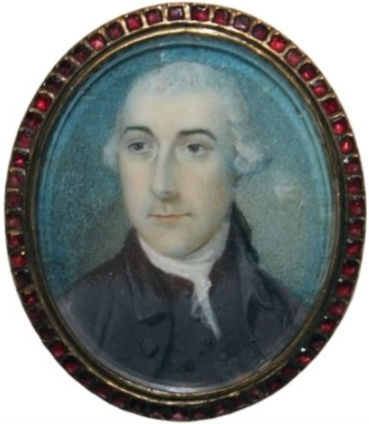
Joseph Hewes was born on January 23, 1730, at Maybury Hill in Princeton, New Jersey, to Aaron and Providence (Worth) Hewes. He was one of two children. His family ancestry can be traced back to England, where his paternal line left in 1635 and settled in Pennsylvania. Hewes was raised a Quaker but abandoned the faith prior to the Revolution. Not much is known about his childhood, but it was probably similar to that of other Quaker children who were schooled in public schools and worked on their family’s farm. We do know that the main home, at Maybury Hill, was burned and rebuilt in 1735. We also know he attended Kingston Friends Grammar School and then Princeton. After graduating from Princeton, he worked in a counting house in Philadelphia, where he trained as a merchant from about 1749 until 1754.
In 1756, he moved to Edenton, North Carolina, but some documentation indicated he moved to Wilmington in 1760 and then to Edenton in 1763. Other documents suggest he moved to Edenton in 1765. We do know he had lived in New York and Philadelphia prior to his move to Edenton. Once in Edenton, he established his own successful mercantile and shipping business after entering a partnership with George Blair and Charles Blount. His nephew joins him, and they become partners.
He becomes engaged to Isabella Johnston, but she dies a few days before their marriage. He would never marry or have children, as she had been the love of his life. She was the sister of Samuel Johnston, one of the Governors of North Carolina. This event would make him a moody man for the rest of his life.
He was appointed Justice of the Peace for Chowan County in 1757, and in 1766 he served as a borough member of the Colonial Council from Edenton. He would serve in this capacity until 1775, when the Council stopped meeting due to the Revolution. He was appointed a member of the Finance Committee due to his keen business sense and served on the Committee of Correspondence in 1773. The purpose of this committee was to keep abreast of English moves and stay in touch with the other colonies, and to unify a program of resistance and protest. Also in 1773, he was Edenton’s leading businessman and was in a partnership with Roger Smith. They had a store and operated a shipyard located where Pembroke Creek and Edenton Bay meet. Their first ship was named the Providence, after Hewes’ mother. Boston Port was closed this year, and Hewes, along with another man named John Harvey, collected a shipload of supplies and sent it to Boston.
By 1774, he was elected to the First Continental Congress and arrived on September 14, 1774. He helps to develop and support the non-importation agreements, even though it affects his business. When the first session ends in 1774, Hewes returns to Edenton. He had malaria and wrote that he was suffering from fever and ague, which was another name for the disease. This disease was quite common among the signers, and several of them would have their health greatly affected by it.
1775 was a busy year for him, as the Quakers denounced the Revolution, severing his connection to the religion. He then partnered with Roger Smith in Edenton, and the new firm was called Hewes and Smith; it was valued at £20,000. He was a member of the Edenton Committee of Safety. Finally, he was re-elected to the Second Continental Congress.
He returns to Philadelphia and spends the entire year (1776) there. He was a member of the Committee on Claims, the Committee to Fit out Armed Vessels, the Secret Committee, the Committee to prepare a Plan of Confederation[1], and the Marine Committee, of which he was chairman. He was appointed Chairman of this committee for his practical sense and extensive experience in the shipping industry. As the Chairman of the Marine Committee, he was considered the Navy’s first Executive. He would nominate John Paul Jones[2] for a naval appointment, and Jones would become a first lieutenant in the new Navy. Hewes had been his friend and benefactor. Jones never forgot Hewes and expressed his gratitude in a letter: “You are the angel of my happiness; since to your friendship I owe my present enjoyments, as well as my future prospect. You have more than any other person labored to place the instruments of success in my hands.” [3] John Paul Jones would go on to become the most decorated naval officer in the Revolution.
By May of 1776, the flames of independence were blowing hot, but Hewes felt that talk of separation was premature. North Carolina authorized its delegates to vote for independence in April of 1776, after the Halifax Resolves were adopted. However, Hewes, who was to present those Resolves to Congress, thought it premature and still held out hope for reconciliation. This was not an unusual tactic, as several other delegates were hoping for the same thing. In June, when Richard Henry Lee presents his resolution, Hewes opposes it. During the debates on the Declaration, something happened, and he “stands up suddenly, lifted both arms to heaven and cried ‘It is done, and I will abide by it’.”[4] John Adams would note this event in his diary and firmly believed this incident helped to convince those who opposed independence to change their minds. Hewes votes for independence on July 2 and signs the engrossed copy on August 2, 1776.
His health became impaired during his work in Congress as he would work from 6 am to 5 or 6 pm in the evenings without stopping for food or drink. In 1777, he was not selected for re-election to Congress and returned to Edenton. Then, in 1779, he was re-elected to Congress, but his health remained tepid due to undernourishment and exhaustion. His last appearance in Congress was on October 29, 1779, and he passed away on November 10, 1779. He was the only signer to die at the seat of government and was buried in Christ Church Cemetery in Philadelphia. Congress wears black armbands for one month, in his honor, and the entire Congress attends his funeral.
Tidbits He loved to dance, and his nephew would inherit most of his estate Two Naval Ships were named after him. One in WWII, which was eventually sunk by a German torpedo, and the other in Vietnam. That second ship was sold to the Taiwanese in 1994 There is only one known likeness of him and it was painted by Charles Wilson Peale in 1776, |
[1] This committee was putting together the Articles of Confederation.
[2] John Paul Jones’ last name was actually an alias.


Comments