


On this date...
- katellashisadventure
- Jan 24
- 4 min read

In 1639, the Connecticut colony was organized under the Fundamental Orders.
In 1648, Lord Baltimore's representative, Margaret Brent ejected from the Maryland Council after requestingthe right to vote.
In 1656, the first Jewish doctor in the North American colonies, Jacob Lumbrozo, arrived in Maryland.
In 1776, Colonel Henry Knox arrived in Cambridge, Massachusetts, with the 43 British cannons and 16 mortars captured by Ethan Allen at Fort Ticonderoga. These artillery pieces have been transported cross-country through the wilderness.
In 1776, the Second Continental Congress authorized a three-man committee to draft a letter, this one signed by John Hancock, to Canada promising new efforts to expel the British and encouraging Canadians to appoint delegates to the Congress.
In 1781, Lieutenant Colonel “Light Horse” Henry Lee and Brigadier General Francis “Swamp Fox” Marion of the South Carolina militia combined their forces and raided Georgetown, South Carolina. Georgetown was a Loyalist stronghold protected by 250 British troops led by Lt. Colonel George Campbell.
In 1826, the US signed the Treaty of Washington with the Creek Tribe, granting them the right to stay on their lands for two years.
In 1848, James Marshall spotted gold nuggets glistening in a California stream while constructing a sawmill for John Sutter, the Swiss-born founder of what would become the state's capital city. Although the pair initially kept the nuggets a secret, Sutter eventually reported their finding to the government, setting off the California Gold Rush, which enticed hundreds of thousands of settlers west to try their luck.
In 1865, the Confederate Congress agreed to continue prisoner exchanges, opening a process that had operated only sporadically for three years.
In 1870, as she departed the port city of Yokohama on her return voyage to the United States, the USS Oneida was struck by the British Peninsular & Oriental (P&O) Line Steamer Bombay. The collision severely damaged the Oneida, which sank within about fifteen minutes, taking with her at least 115 sailors (20 officers/95 enlisted men).
In 1903, U.S. Secretary of State John Hay and British Ambassador Herbert created a joint commission to establish the Alaskan border.
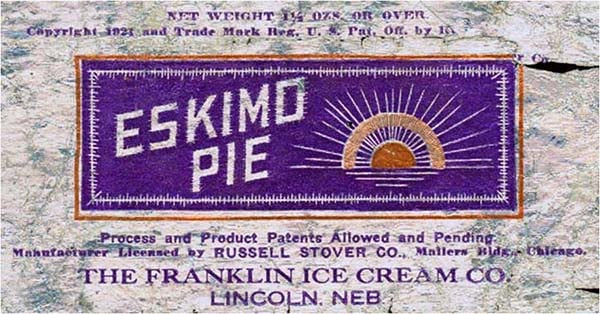
In 1922, inspired by a boy who came into his confectionery shop and couldn’t decide between chocolate and ice cream, Christian K. Nelson combined the two, receiving a patent for the Eskimo bar—originally marketed as "I-Scream" bars.
In 1923, the Aztec Ruins National Monument in New Mexico was established.
In 1933, the 20th Amendment to the United States Constitution was ratified, changing the beginning and end of terms for all elected federal offices.
In 1935, Canned beer made its debut. In partnership with the American Can Company, the Gottfried Krueger Brewing Company delivered 2,000 cans of Krueger’s Finest Beer and Krueger’s Cream Ale to faithful Krueger drinkers in Richmond, Virginia.
In 1936, Congress passed the Adjusted Compensation Act by overriding President Roosevelt’s veto. The bill allows for immediate cash redemption of the bonus certificates held by veterans of World War I.
In 1940, The Grapes of Wrath, the acclaimed film adaptation of John Steinbeck's classic novel, had its world premiere. The character Tom Joad's soliloquy on the poor, reflecting his empathy for their plight, remains one of the most famous scenes in film history.
In 1943, President Franklin D. Roosevelt and British Prime Minister Winston Churchill concluded a wartime conference in Casablanca, Morocco.
In 1952, the First NFL team in Texas; Dallas Texans, formerly the NY Yanks; loses 11 of 12 games.
In 1956, Look magazine published the confessions of J.W. Milam and Roy Bryant, two white men from Mississippi who were acquitted in the 1955 kidnapping and murder of Emmett Louis Till, an African American teenager from Chicago.
In 1972, the Supreme Court struck down laws that denied welfare benefits to people who had resided in a state for less than a year.
In 1984, Steve Jobs introduced Apple's revolutionary computer, Macintosh, two days after the groundbreaking commercial “1984” aired before a national TV audience and heralded the product's impending release.
In 1995, the prosecution gave its opening statement in the O.J. Simpson murder trial.
In 2003, the Department of Homeland Security began operations.
In 2003, the six-wheeled robotic rover Opportunity landed on Mars and—like its twin rover, Spirit, which had landed on January 3—analyzed rocks and soils and relayed pictures back to Earth.
In 2006, Disney announced that it would purchase animation studio Pixar for $7.4 billion.
In 2011, Jared Lee Loughner pleaded not guilty in Phoenix to federal charges he'd tried to kill U.S. Rep. Gabrielle Giffords and two of her aides in a Tucson shooting rampage that had claimed six lives.
In 2013, President Barack Obama’s Defense Secretary Leon Panetta announced the lifting of a ban on women serving in combat.
In 2017, President Trump withdrew the US from the Trans-Pacific Partnership Agreement.
In 2018, former sports doctor Larry Nassar, who had admitted to molesting some of the nation’s top gymnasts for years under the guise of medical treatment, was sentenced to 40 to 175 years in prison.
In 2025, US President Donald Trump fired over a dozen independent Inspectors General, without the required 30-day advance notice, citing reasons for the firing to Congress



Comments