


On this date...
- katellashisadventure
- Jan 26
- 3 min read


In 1654, according to the terms of the capitulation protocol, Portugal decreed that Jewish and Dutch settlers had three months to leave Brazil. Approximately 150 Jewish families of Portuguese descent fled the Brazilian city of Recife, in the state of Pernambuco. By September, twenty-three of these refugees had established the first community of Jews in New Amsterdam.
In 1782, the Battle of Frigate Bay took place between a British fleet under Rear-Admiral Sir Samuel Hood and a larger and more superior French fleet under the Comte de Grasse.
In 1784, in a letter to his daughter, Benjamin Franklin expressed unhappiness over the eagle as the symbol of America. He wanted the turkey.
In 1787, Daniel Shays led his rebel force in an unsuccessful attack against the Federal arsenal at Springfield, Massachusetts.
In 1802, Congress passed an act calling for a library to be established within the U.S. Capitol.
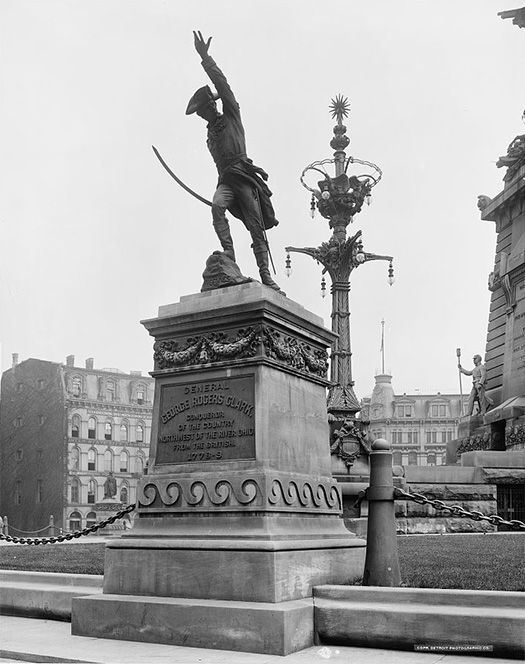
In 1837, Michigan became the 26th U.S. state admitted to the union.
In 1838, the first Prohibition law in the history of the United States was passed in Tennessee, making it a misdemeanor to sell alcoholic beverages in taverns and stores.
In 1839, the Republic of Texas' Congress passed a homestead act. It guaranteed every citizen or household that their homestead—up to fifty acres or a town lot, as well as the structures—could not be seized to pay debts.
In 1861, Louisiana seceded from the Union.
In 1862, a Union squadron commanded by Captain Davis, comprising U.S.S. Ottawa, Seneca, and other vessels, with 2400 troops under Brigadier General Horatio G. Wright, conducted a strategic reconnaissance of Wassaw Sound, Georgia.
In 1863, General Joseph Hooker assumed command of the Army of the Potomac following Ambrose Burnside’s disastrous tenure.
In 1870, Virginia rejoined the Union.
In 1875, Mistakenly believing Frank and Jesse James are hiding out at their family home, a gang of men—likely led by Pinkerton detectives—mount a raid that leaves the outlaws’ mother permanently maimed and their nine-year-old half-brother dead.
In 1915, President Woodrow Wilson signed the act establishing Rocky Mountain National Park.
In 1936, the dismembered body of Florence Polillo was found in a basket and several burlap sacks in Cleveland. The 42-year-old woman was the third victim in 18 months to be found dismembered with precision. It sparked a panic in Cleveland, where the unknown murderer was dubbed the “Mad Butcher.”
In 1942, the first U.S. expeditionary force to land in Europe during World War II reached Ireland.
In 1945, the most decorated man of the war, American Lt. Audie Murphy, was wounded in France.
In 1961, just about a week after his inauguration, President John F. Kennedy appointed Janet Travell, 59, as his personal physician, making her the first woman in history to hold the post.
In 1970, U.S. Navy Lt. Everett Alvarez Jr. spent his 2,000th day in captivity in Southeast Asia. First taken prisoner when his plane was shot down on August 5, 1964, he became one of the longest-held POWs in U.S. history.
In 1979, “The Dukes of Hazzard,” a television comedy about two cousins in the rural South and their souped-up 1969 Dodge Charger known as the General Lee, debuts on CBS.
In 1980, at the request of President Jimmy Carter, the U.S. Olympic Committee voted to ask the International Olympic Committee to cancel or move the upcoming Moscow Olympics. The action was in response to the Soviet military invasion of Afghanistan the previous month.
In 1988, Andrew Lloyd Webber's The Phantom of the Opera, a musical version of Gaston Leroux's melodramatic novel, opened in New York City. It went on to become the longest-running show in Broadway history, closing in 2023.
In 1996, First Lady Hillary Rodham Clinton testified before a grand jury connected to the Whitewater probe.
In 1998, President Bill Clinton forcefully denied having an affair with a former White House intern, telling reporters, “I did not have sexual relations with that woman, Miss Lewinsky.”
In 2005, Condoleezza Rice became the first Black woman appointed US secretary of state.
In 2006, during a live broadcast of her daytime TV talk show, Oprah Winfrey confronted author James Frey about fabrications in A Million Little Pieces, his memoir about addiction and recovery, which she chose as an Oprah’s Book Club selection in September 2005.
In 2009, "Octomom" Nadya Suleman of Whittier, Calif., gave birth to octuplets conceived by in vitro fertilization. Suleman was already a mother of six.



Comments