


On this date...
- katellashisadventure
- 2 days ago
- 3 min read

In 1776, a small, 14-gun American warship, the Lexington, captured the sloop H.M.S. Edward off the coast of Virginia, right in front of the British Naval Blockade.
In 1776, Washington’s army marches steadily through southern New England, its columns stretching for miles along muddy spring roads.
In 1776, from Albany, Major General Philip Schuyler writes that the American army in Canada is dangerously weak and urges Washington to send reinforcements quickly. Meanwhile, at Gloucester, Winthrop Sargent reports Loyalists and British soldiers taken from a seized vessel. The letter reflects an expanding maritime war; just days ago, Congress authorized American privateers to attack British ships.
In 1788, the first settlement in Ohio was established at Marietta.
In 1798, the Mississippi Territory was organized.
In 1805, after a long winter, the Lewis and Clark expedition departed its camp among the Mandan tribe and resumed its journey West.
In 1818, General Andrew Jackson conquered Spanish Fort San Marcos (St Marks), in Spanish Florida, during his pursuit of the Native American Seminole Tribe, in what would become known as the First Seminole War
In 1862, two days of heavy fighting concluded near Pittsburgh Landing in western Tennessee. The Battle of Shiloh became a Union victory after the Confederate attack stalled on April 6, and fresh Yankee troops drove the Confederates from the field.
In 1902, the Texas Fuel Company was founded in Beaumont, Texas. A month later, its assets formed the Texas Company, which we know today as Texaco.
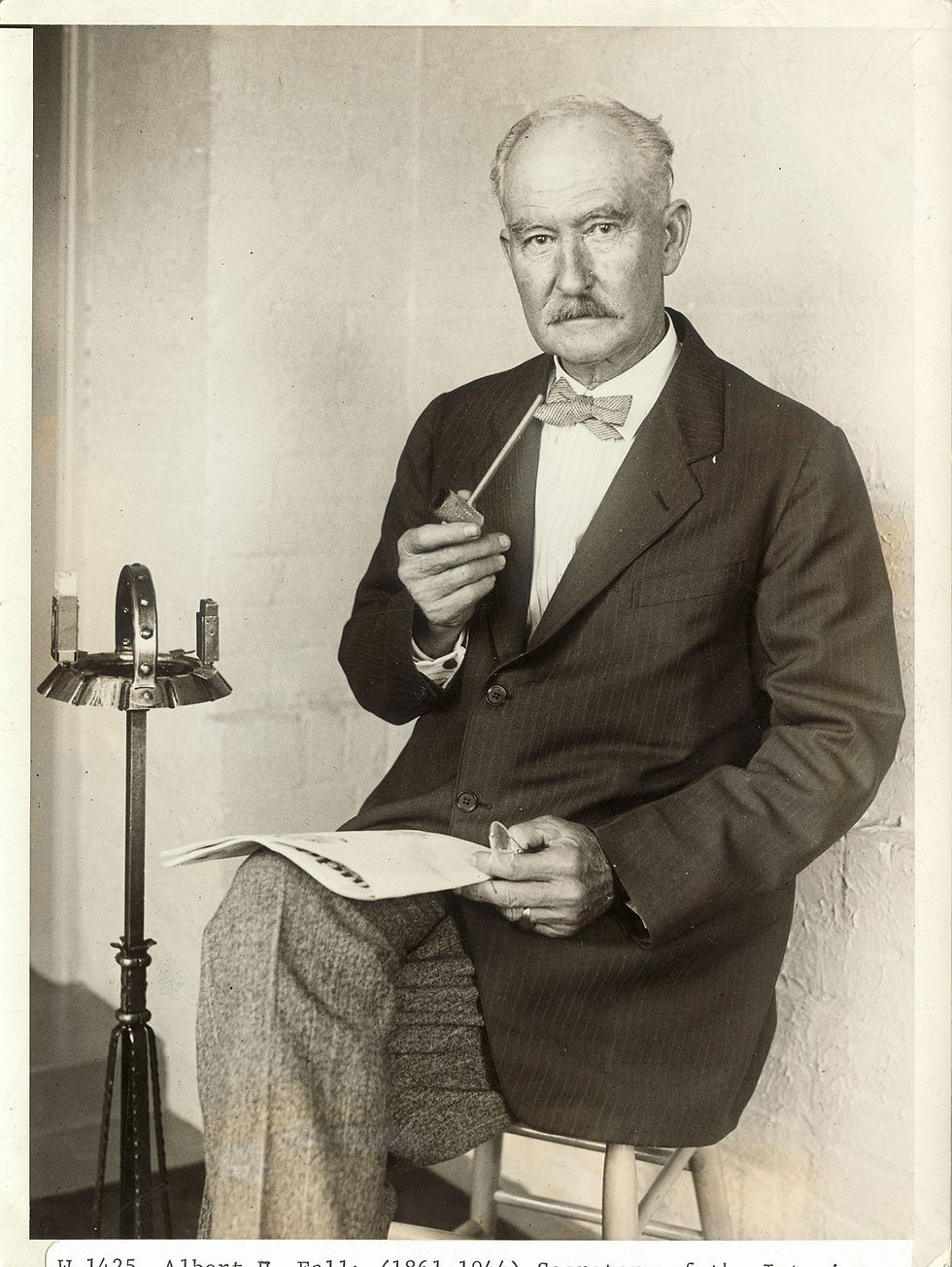
In 1922, U.S. Secretary of the Interior Albert Bacon Fall secretly leased federal oil reserves to the Mammoth Oil Company in return for cash gifts. The oil field at Teapot Dome in Wyoming gave the Teapot Dome corruption scandal its name.
In 1923, the Workers Party of America (NYC) became the official communist party.
In 1927, the first public demonstration of a one-way videophone occurred between Herbert Hoover, then U.S. secretary of commerce, in Washington, D.C., and officials of the American Telephone and Telegraph Company (AT&T) in New York City.
In 1933, some eight months before Prohibition was repealed, low-alcohol beer became legal in the United States; the day was subsequently celebrated as National Beer Day.
In 1940, Tuskegee Institute founder Booker T. Washington became the first Black American to be honored with a postage stamp.
In 1950, President Harry S. Truman received National Security Council Paper Number 68 (NSC-68). The report was a group effort, created with input from the Defense Department, the State Department, the CIA, and other interested agencies; NSC-68 formed the basis for America’s Cold War policy for the next two decades.
In 1954, President Dwight D. Eisenhower held a news conference in which he outlined the concept of the “domino theory” as he spoke of the importance of containing the spread of communism in Indochina, saying, “You have a row of dominoes set up, you knock over the first one, and what will happen to the last one is the certainty that it will go over very quickly.”
In 1959, Oklahoma ended prohibition after 51 years.
In 1961, President John F. Kennedy sent a letter to Congress recommending that the U.S. participate in an international campaign to preserve ancient temples and historic monuments in the Nile Valley of Egypt.
In 1966, the U.S. Navy recovered a hydrogen bomb that the U.S. Air Force had lost in the Mediterranean Sea off Spain following a B-52 crash.
In 1968, Gangsters Henry Hill and Tommy DeSimone commit the Air France robbery, stealing $420,000 from the cargo terminal at New York City's JFK International Airport.
In 1969, the Supreme Court unanimously struck down laws prohibiting private possession of obscene material.
In 1980, the US broke diplomatic ties with Iran during the Iran hostage crisis.
In 1984, the Census Bureau reported that Los Angeles had overtaken Chicago as the nation’s “second city” in terms of population.
In 1990, former national security adviser John M. Poindexter was convicted of five counts at his Iran-Contra trial. (A federal appeals court later reversed the convictions.)
In 2001, NASA launched the 2001 Mars Odyssey spacecraft, which reached Mars in October and transmitted photos and other data back to scientists on Earth.
In 2009, Vermont became the fourth state to legalize gay marriage.
In 2017, US President Donald Trump ordered a missile strike on a Syrian airfield after a chemical weapons attack on Khan Sheikhoun
In 2022, Ketanji Brown Jackson was confirmed as the first Black female US Supreme Court justice.


Comments