


Francis Hopkinson: NJ Declaration Signer


Francis Hopkinson was born on September 21, 1737, in Philadelphia, Pennsylvania, to Thomas and Mary (Baldwin Johnson) Hopkinson. He was the eldest of eight children. His family ancestry can be traced back to England, from which his father and mother emigrated. His mother, Mary, was the niece of the bishop of Worcester.[1]
His father died when he was fourteen years old, and, normally, as the eldest child, he would have had to take on additional duties to support the family. But his mother was determined to give her son a good education. He enrolled at the College of Philadelphia, graduated with a B.A. in 1757, and then obtained an M.A. in 1760. Through his passion for learning, he would become skilled in chemistry, mathematics, anatomy, and natural history, making him a Renaissance man. He would then read law with the Attorney General of Pennsylvania, Benjamin Chew, and be admitted to the bar in 1761. He was unproductive as an attorney and sought out other positions.
From 1763 to 1765, he had several different positions. He was secretary to the Provincial Council of Pennsylvania Indian commission, helping to draft treaties with several Indian tribes, including the Delaware Indians. He was also a customs collector for Salem, New Jersey, and tried his hand at business, but was not successful. He was then a librarian and the Secretary of the Philadelphia library.
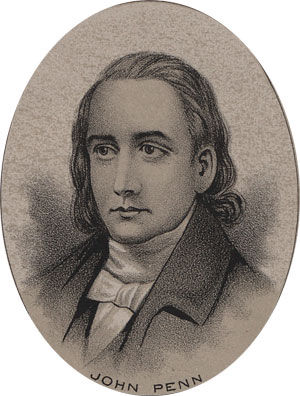
Hopkinson left for England in 1766 to secure the position of Customs Commissioner for North America, but was not successful. He does make useful contacts through Lord North and his half-brother, Brownlow North, the future Bishop of Worcester, who educates him on politics and Parliament. While in England, he took painting lessons from Benjamin West, who was a noted painter of his time. He also visits Benjamin Franklin, who was a friend of his father, and meets with John Penn and other notable individuals. He would return to New Jersey and resume his law practice in August of 1767.
On September 1, 1768, he married Ann Borden, daughter of Joseph and Elizabeth (Rodgers) Borden of Bordentown, New Jersey. They would have nine children together, but four of their children would die as infants. Luckily, the rest would marry and have descendants. James was born in 1769, followed by Joseph, who was born in 1770 and died in 1842. Joseph was a noted lawyer, congressman, and author of the song Hail Columbia. Their first daughter, Elizabeth, was born in 1772, followed by Mary in 1773, and then Thomas, who was born in 1775 and died in infancy. Frances and Sarah were born in 1781 and 1783, respectively.
In the year after his marriage, Hopkinson became a member of the American Philosophical Society, and by 1772, was appointed inspector of customs at New Castle, Delaware. He would be removed from this position due to his lack of republican beliefs at the time. From 1774 to 1776, he served on the New Jersey Royal Provincial Council after moving his family to Bordentown, New Jersey. During this period, he was admitted to the New Jersey bar, and then, in 1776, he resigned his royal commission.

There does not appear to be a single event that led him to join the patriot cause; rather, it seems to have been the general tyranny of the British Parliament at the time. He wrote several satirical pieces aimed at the British. The first piece, in 1775, would be titled A Pretty Story, an exposition on the tyranny of Great Britain. His other writings would include satirical essays on the disgraces of newspaper writing that were producing so-called scandals.
He was elected to Congress on June 28, 1776, and voted for independence on July 2, then signed the engrossed copy of the Declaration on August 2, 1776. He was among the men elected to replace the delegates who refused to vote for independence. During his time in Congress, he wrote several political essays, including Letters of a Tory, Letters to Lord Howe, and Answer to General Burgoyne’s Proclamation. He wrote in the Proclamation, “The mountains tremble before thee, and the trees of the forest bowed their lofty heads: the vast lakes of the west were chilled at thy presence, and the stupendous cataract of the Niagara bellowed as they approach.” [2] This was written in response to General Burgoyne telling the inhabitants of the colonies that he would march across them to awe them with his power. He leaves Congress in November of 1776 to return to his law practice and serve on the Navy Board in Philadelphia.
By 1778, he was the Treasurer of the Continental Loan Office and wrote The Temple of Minerva to celebrate the Alliance with France. This was the first American attempt at opera, performed in December of 1781, with General Washington and the French Minister in attendance. He would soon be appointed a Judge of the Admiralty Courts of Pennsylvania, succeeding George Ross in 1779, and was reappointed in 1780 and 1787. The same year he was appointed a judge, the British damaged his home and looted his belongings. After the war, an unidentified person would return one of his library books, saying that such a learned man deserved to have it back.[3]
In 1787, he served in the New Jersey State Assembly and was instrumental in securing the Constitution’s ratification in New Jersey. He also worked for its ratification in Delaware and Pennsylvania through his writings and speaking to people he knew in those areas. President Washington appointed him as a Judge of the US District Court for the Eastern District of Pennsylvania. Hopkinson received this commission on September 26, 1789, and did well at staying out of party politics during his service. This year, he was the Secretary of the Convention that organizes the Protestant Episcopal Church.
Politics was not the only avenue Hopkinson pursued; he was a multi-talented man who wrote music and satirical pieces, produced art, and invented or improved items. Some of the items he improved or invented were the harpsichord pic, ship’s logs, and a shaded candlestick. He was also a poet and wrote several different pieces, such as:
Give Me Thy Heart
Give me thy heart as I give mine,
Our hands in mutual bonds will join,
Propitious may our union prove,
What’s life without the joys of love?
Should care knock rudely at our gate,
Admittance to obtain,
Cupid shall at the casement wait,
And bid him call again!
Give me thy heart as I give mine,
Our hands in mutual bonds will join,
Propitious may our union prove,
What’s life without the joys of love?
His other satirical writings would address the teaching of English through grammar, the study of Latin and Greek, and his contempt for some of the arts and sciences taught in colleges.
Writing was not the only thing he contributed to the cause or country at large. He was also an artist who could paint and draw. Pre-1776 artistic contributions include: designing the seal for the American Philosophical Society and the New Jersey State Seal. In 1777, he submitted a design for the United States flag, and it was accepted. There are no sketches of his flag known to exist today, but the original descriptions state that there would be 13 alternating red and white stripes with a 13-star blue field. The stars were originally meant to be arranged in rows and to be six-pointed, similar to the Union Jack. Some accounts say that Betsey Ross suggested changing the stars to five points, but these accounts cannot be verified. This particular flag design has been incorporated into other designs for which he is credited, such as the Navy Flag, for its use of red stripes, and the Great Seal of the United States, which includes the flag design. Unfortunately, aside from Hopkinson’s bill to Congress, we cannot definitively verify that he was the designer of the flag, but historians generally accept that he was. In his bill, he asks for “a Quarter cask of the Public Wine,”[4] but Congress refuses to pay him because they say he did it as a Treasury employee and therefore had already been compensated. Hopkinson would resubmit the bill. The matter would be dropped when he submitted his resignation from the Treasury. When he worked on the Great Seal of the United States, he was part of a team that handled a separate section of the seal. His team’s contributions were the six-pointed star on the eagle’s head, the olive branch, and the shield with the stars and stripes. He would also submit designs for U.S. currency. He liked to draw caricatures of his fellow Congressmen while sitting in the Continental Congress.[5]
As mentioned before, he wrote the first American opera, but his interest in music began in 1754, when he began studying the harpsichord and learned to play the organ. In 1757, he performed Alfred a Masque by Thomason & Malet, but he revised some of the music and composed other original pieces for his program that evening. He then publishes Seven Songs, a collection of psalm tunes. It was noted in some books that he was possibly the first publisher of a book of music. In 1765, he published a translation of the Psalter for the Reformed Protestant Dutch Church of New York. He would continue to write songs throughout the 1760’s and had a large volume of work. He built a keyboard for Benjamin Franklin and wrote the earliest American secular song, "My Days Have Been So Wonderous Free."[6]
Unfortunately, this multi-talented man departed this world on May 9, 1791. Some writings indicate he died of an epileptic seizure, and others indicate he had gout of the head. He had risen that morning to have breakfast with his family, with the seizure occurring around 7:00 in the morning, and died two hours later. Another document noted that the night before he died, he had not been feeling well and had a restless night of sleep. He is buried in Christ Church Cemetery in Philadelphia, Pennsylvania. After his death, a book called The Miscellaneous Essays and Occasional Writings of Francis Hopkinson was published in Philadelphia.
Tidbits Small in stature, animated in speech and physical gestures when he spoke. He was considered exceedingly kind and generous to those in need. His wit was noted to be mild and elegant rather than coarse. He would rather engage in joy instead of mirth. He was a Whig, then a Republican, and finally a Federalist in the last years of his life. |
[1] “Biographical Sketch of Francis Hopkinson, Esq." Casket (1826‑1830) no. 3 (03, 1829): 97.
[2] Hopkinson, Francis. The Miscellaneous Essays and Occasional Writings of Francis Hopkinson, Esq. (Philadelphia, PA, T. Dobson, 1792) 147.
[3] Kiernan, Denise, and Joseph D’Agnese. Signing Their Lives Away: The Fame and Misfortune of The Men Who Signed The Declaration of Independence (Philadelphia: Quirk Book, 2009) 92
[4] Kiernan, Denise, and Joseph D’Agnese. Signing their lives away: the fame and misfortune of the men who signed the Declaration of Independence 92
[5]Kiernan, Denise, and Joseph D’Agnese. Signing their lives away: the fame and misfortune of the men who signed the Declaration of Independence
[6] Kiernan, Denise, and Joseph D’Agnese. Signing their lives away: the fame and misfortune of the men who signed the Declaration of Independence



Comments